.svg)
.svg)


%201.svg)

Introduction
Buccal massage is an intraoral facial technique — meaning it is performed partially inside the mouth — that directly targets the deep muscles of the face and jaw that no amount of external massage can reach. I designed the FACECO Method around buccal massage because it is the only non-invasive technique that addresses facial aging, tension, and sculpting at the source: the muscles themselves.
If you have heard of buccal massage and wondered whether it is legitimate, or whether it is just another wellness trend — that is a fair question. This article gives you the anatomy behind why it works, what it actually does, and what to honestly expect from it.
What actually happens during a buccal massage?
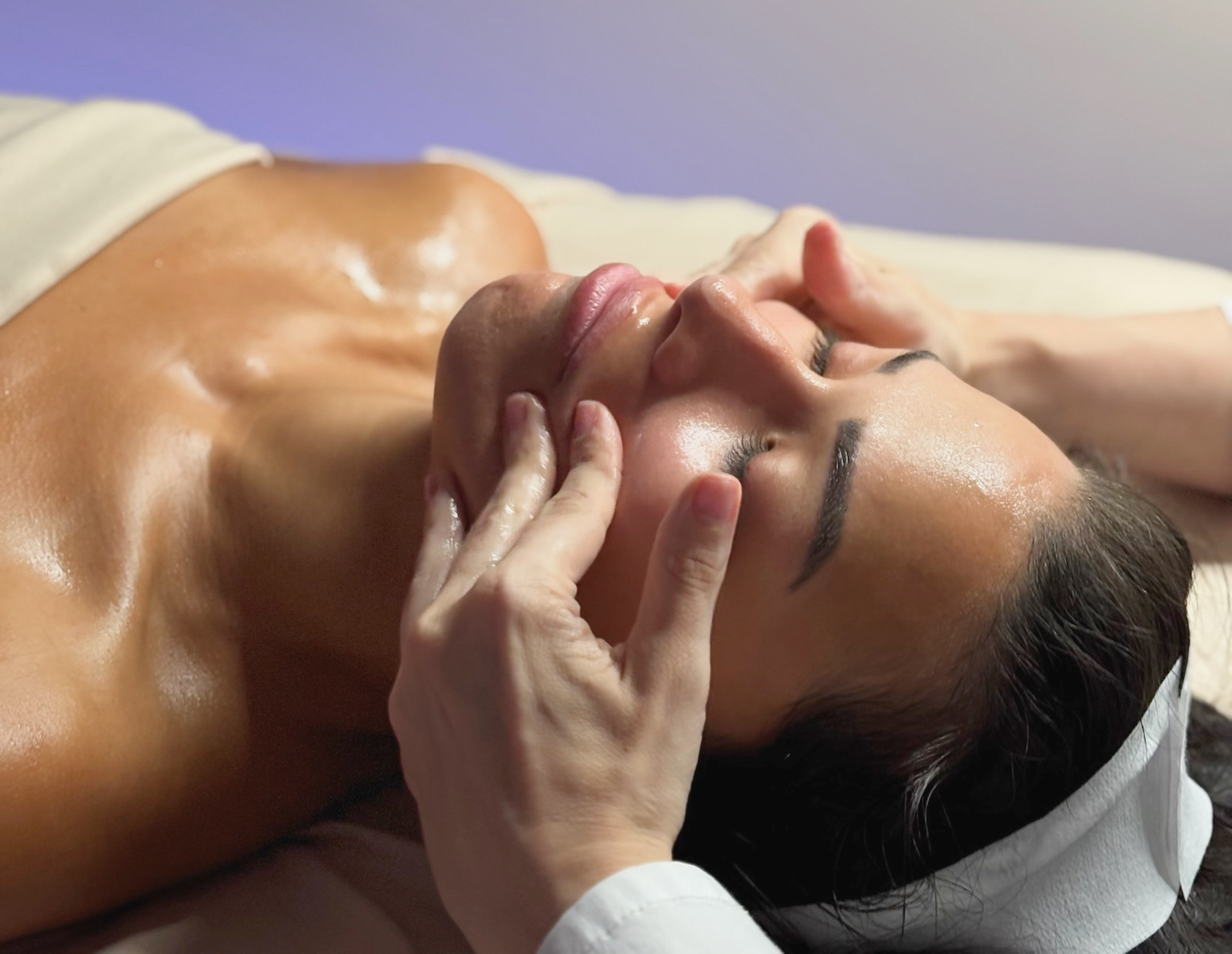
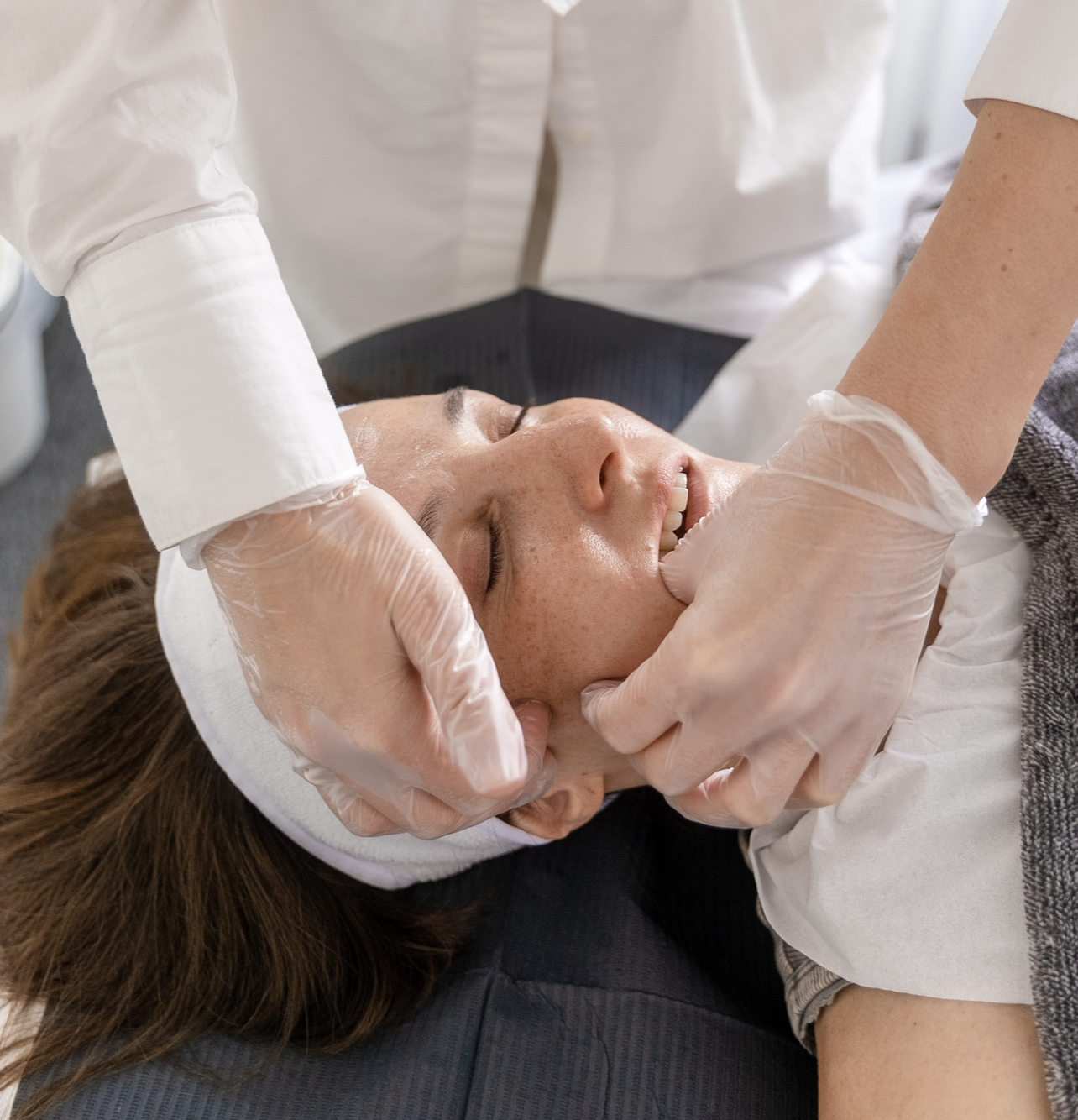
Buccal massage involves a trained specialist working both on the outside of your face and, wearing gloves, on the inside of your mouth simultaneously. This dual-access approach is what makes it fundamentally different from a regular facial massage.

The technique targets three key muscle groups that hold the majority of facial tension and contribute significantly to how the face ages:
- The masseter — the thick muscle along your jawline responsible for chewing, and the most common site of tension from clenching and teeth grinding
- The buccinator — the muscle of the cheek wall, which when chronically tense contributes to a heavy, compressed appearance in the mid-face
- The pterygoid muscles — deep jaw muscles that cannot be reached at all from outside the mouth, and are a primary driver of TMJ pain and restricted jaw movement
By working these muscles from both sides at once, buccal massage can release tension at depths that are simply not accessible through skin-level techniques like gua sha, facial rollers, or conventional massage. The mouth is the access point — not a gimmick, but an anatomical necessity.
The face has 43 muscles, most of which we hold in chronic tension without realising it. Buccal massage addresses the deepest layer of that tension — where aging and pain actually begin.
What is buccal massage good for?
Because it works on both the therapeutic and cosmetic layers of facial function, buccal massage addresses a wider range of concerns than most single treatments:
TMJ pain and jaw tension. The most immediate and consistent result our clients report. If you clench your jaw during the day, grind your teeth at night, or experience headaches that start at the jaw, buccal massage targets the exact muscles responsible. Many clients say the jaw feels looser right away.
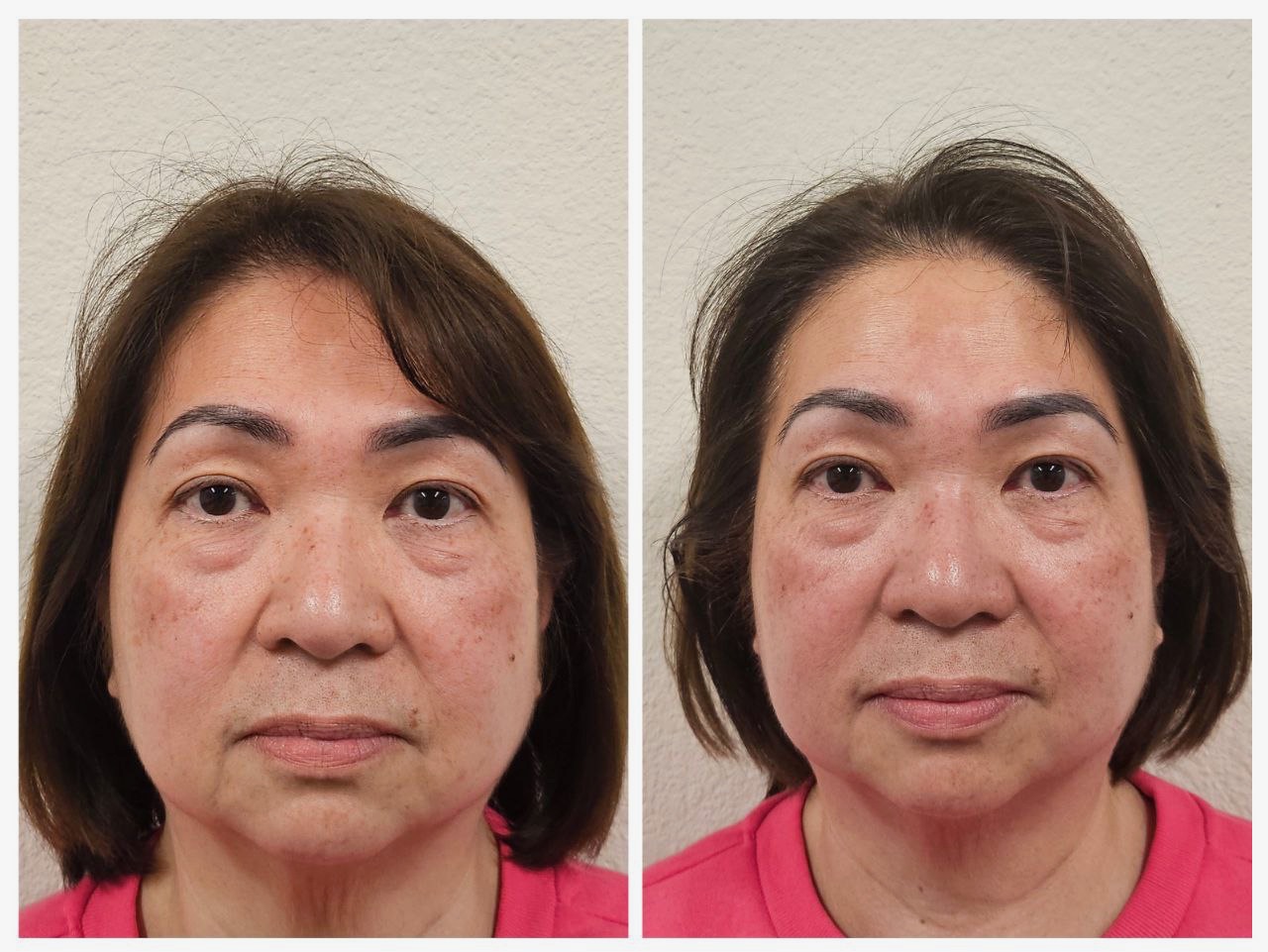
Facial sculpting and jawline definition. Chronically contracted muscles create bulk and compress the face. Releasing them allows the face to return to its natural structure — cheekbones become more visible, the jawline sharpens, and the overall shape feels more open and defined.
Natural lifting. Muscle tension pulls the face downward over time. Releasing that tension — combined with improved circulation and lymphatic drainage — creates a visible lift that does not require filler or surgery.
Lymphatic drainage. The technique stimulates lymphatic flow in the face, reducing puffiness, fluid retention, and the heavy appearance that comes with chronic inflammation. Clients often notice a slimmer, more contoured appearance in the lower face after a single session.
Improved circulation and skin quality. Increased blood flow delivers more oxygen and nutrients to skin cells. Over a course of sessions, clients typically see improvements in skin tone, brightness, and texture alongside the structural benefits.
Does buccal massage actually work?
Yes — and the mechanism is not mysterious. It is straightforward anatomy.
The face ages in three dimensions: the skin loses collagen and elasticity, the fat pads shift, and the underlying muscles chronically contract. Most skincare and facial treatments address the first layer only. Buccal massage is one of the very few techniques that works directly on the muscular layer — which is where much of what we perceive as aging and heaviness actually originates.
The results are not permanent without maintenance, just as the benefits of exercise do not persist without regular training. But they are real, they are cumulative, and for many clients — particularly those dealing with jaw pain or early signs of facial aging — they are the most significant results they have seen from any non-invasive treatment.
The skepticism around buccal massage usually comes from conflating it with trends like facial yoga or gua sha, which work at a superficial level. Buccal massage is a specialized technique performed by trained specialists. At FACECO, every session is built on the principles of facial anatomy that I developed through years of clinical practice in dermatology in Saint Petersburg, Russia.
What to expect at your first buccal massage session at FACECO
Before the session begins, we assess your tension patterns, facial symmetry, and the specific areas where muscle tightness or stagnation are most pronounced. No two faces are alike, and the session is adjusted accordingly.
During the treatment:
- You will be lying down in a relaxed position throughout
- External work on the face, jaw, neck, and scalp comes first — warming the tissue and preparing the deeper muscles
- The intraoral portion uses gloves and targeted pressure to release the masseter, buccinator, and pterygoid muscles from inside the mouth
- Most clients describe the sensation as somewhere between deep pressure and relief — similar to releasing a knot in a shoulder muscle. It is not painful, though some areas of tension may be tender
- Sessions at FACECO typically run 60 to 90 minutes
After the session, some clients notice mild tenderness in the jaw muscles for 24 to 48 hours — the same response you would expect after any deep tissue work. This is normal and resolves quickly. Most clients feel an immediate sense of release in the jaw and a visible change in the appearance of the lower face on the same day.
For cosmetic results, we typically recommend a course of 4 to 6 sessions spaced 2 to 3 weeks apart, followed by monthly maintenance. Many clients say they notice a difference early on, with more over a course of sessions.
Who should avoid buccal massage?
Buccal massage is safe for most adults, but there are specific situations where we recommend caution or waiting:
- Recent dental work, oral surgery, or fillers in the lower face — we recommend waiting at least 2 weeks
- Active cold sores or any open lesions inside the mouth
- Certain autoimmune conditions affecting the jaw or salivary glands — always disclose your medical history at consultation
- Recent Botox injections in the masseter — wait 2 weeks minimum to allow the product to settle
If you are unsure whether buccal massage is appropriate for your situation, we are happy to answer questions before you book. Every FACECO session begins with a brief consultation where you can discuss your health history and goals.
Ready to experience it for yourself?
FACECO was founded on a single belief: that the face can be restored to its natural state without invasive procedures — through deep, science-based technique applied by specialists who understand facial anatomy from the inside out.
Buccal massage is the foundation of everything we do. Whether you are dealing with jaw pain and tension, looking for a non-surgical approach to facial aging, or simply curious about what your face feels like without years of accumulated tension — this is where we start.
Book a session at our Beverly Hills or Newport Beach location. First-time clients receive a complimentary consultation before their first session.